ZachXBT Influencer Payola Leak: 160+ Accounts Named

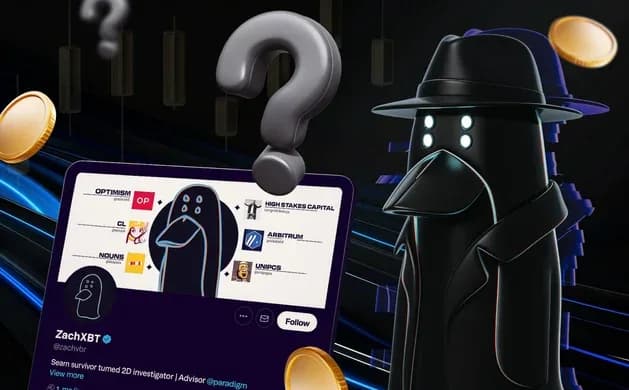
A leaked pricing spreadsheet is currently making its way around crypto Twitter, and it names names. Blockchain investigator ZachXBT published a document this week showing more than 160 crypto influencers accepted paid promotion for a single project, with fees ranging from $50 to $60,000 per post. Out of all of them, fewer than five disclosed the posts were ads.
The ZachXBT influencer payola leak isn't a rumor or a screenshot with the source cropped out. It's a spreadsheet with wallet addresses, quoted rates, and on-chain payment receipts attached to specific X accounts, the kind of receipts that are hard to argue with.
This piece breaks down what the leak actually shows, why undisclosed paid promotion is a real legal problem and not just a vibes problem, and what it says about crypto influencer disclosure standards in 2026.
What the ZachXBT Influencer Payola Leak Actually Shows
The document ZachXBT shared on X is a pricing sheet built around a promotional campaign for Memenetic, described as an AI memecoin platform. It lists X profiles, quoted fees per post, recipient Solana wallet addresses, and links to block explorer pages confirming the payments actually went through.
| What the leak contains | Detail |
|---|---|
| Accounts listed | 200+ named, 160+ confirmed to have accepted payment |
| Fee range | $50 to $60,000 per post |
| Accounts that disclosed the ad | Fewer than 5 |
| Payment proof | Solana wallet addresses + on-chain transaction links |
| Tier system | Accounts bucketed by reach/perceived value |
The spreadsheet also assigns "Tier" labels to each account, effectively a rate card sorting influencers by audience size and expected reach. That detail alone tells you this wasn't a handful of one-off deals. It was an organized campaign with a pricing structure, run the same way a traditional ad agency would run one, except without the one part that's actually required by law.
Undisclosed Paid Promotion Is an FTC Problem, Not a Vibes Problem
ZachXBT was clear about where he actually draws the line. As he put it, "there's nothing wrong with paid promotion as long as you disclose to your followers and believe in the project." His issue isn't that influencers got paid for the ZachXBT influencer payola leak campaign. It's that almost none of them told anyone.
That distinction matters because disclosure isn't optional under US law. The Federal Trade Commission requires anyone with a material financial connection to a brand, meaning they got paid or received free product, to clearly disclose that connection when promoting it. It's the same rule that puts "#ad" on Instagram posts and paid disclaimers on YouTube videos. Crypto influencers post to the same platforms and are bound by the same rule. Enforcement in the space has just been close to nonexistent, which is part of why a leak like this lands so hard.
Sneak peek: disclosure failures aren't new to crypto marketing, they're a recurring pattern that shows up every time a token needs fast attention. The SEC's meme coin classification ruling is worth reading alongside this one, it's the regulatory backdrop that determines how much legal exposure a campaign like this actually carries.
The Twist: The Project Says It Got Scammed Too
Here's the detail that makes the ZachXBT influencer payola leak stranger than a standard "influencers got paid to shill a coin" story. Memenetic, the project behind the promotional campaign, says it didn't run the operation directly. The team claims it was approached by two people, offering to bring in "Quality Influencers" for the token raise, and ended up losing $232,000 in USDC to them in the process.

So the picture isn't a clean "project pays influencers to pump a coin" narrative. It's closer to three separate failures stacked on top of each other: a project that outsourced its marketing without real oversight, two intermediaries accused of running off with campaign funds, and 160+ influencers who took the resulting payments without checking the disclosure box that would have kept them on the right side of FTC rules regardless of who arranged the deal.
Crypto Influencer Disclosure by the Numbers
| Category | Detail |
|---|---|
| Total accounts named | 200+ |
| Accounts confirmed paid | 160+ |
| Disclosure rate | Under 3% |
| Fee ceiling | $60,000 for a single post |
A $60,000 quote for one post isn't a micro-influencer rate. That's the kind of figure attached to accounts with real reach, the sort that show up in crypto Twitter feeds regularly enough that followers reasonably assume they're seeing organic opinion rather than a paid placement. That assumption is exactly what disclosure rules exist to protect. CCN's breakdown of the leak puts the disclosure rate at under 3%, among the lowest ever documented in a single dataset this size.

What This Means If You Follow Crypto Influencers
- Treat token mentions as potential ads by default. With disclosure sitting under 3% in a confirmed dataset this size, assuming a mention is organic is statistically the wrong bet.
- Wallet-linked leaks are becoming a real accountability tool. On-chain payment receipts are much harder to dismiss than a screenshot claim, expect more leaks like this as more campaigns route payment through crypto wallets that leave a public trail.
- Undisclosed promotion is an FTC violation, not just a norms violation. That's true whether the account has 5,000 followers or 500,000.
- A project's own marketing vendor is a real risk, not a footnote. Memenetic's $232,000 loss to the people running its influencer campaign is a reminder that outsourcing promotion without oversight creates two separate ways to lose money.
Quick Answers on the ZachXBT Influencer Payola Leak
What did ZachXBT actually leak? A pricing spreadsheet showing more than 160 crypto influencers were paid between $50 and $60,000 per post to promote a project called Memenetic, with wallet addresses and on-chain payment receipts attached to each account.
How many of the influencers disclosed the payment? Fewer than 5 out of over 160 who accepted payment, according to ZachXBT's review of their posts.
Is undisclosed paid crypto promotion illegal? It violates FTC disclosure requirements, which mandate that any material financial connection between a promoter and a brand be clearly disclosed to the audience.
Did Memenetic pay the influencers directly? According to the project, two intermediaries arranged the influencer campaign and allegedly took $232,000 in USDC from Memenetic in the process, rather than the project running the payments itself.
Is this the first leak of its kind? No. ZachXBT has a track record of publishing on-chain evidence tied to undisclosed crypto promotions, but the scale of the ZachXBT influencer payola leak, 160+ confirmed accounts with a documented tier and pricing system, is unusually large.
Could the influencers named in the ZachXBT influencer payola leak face legal consequences? Potentially. FTC disclosure violations can carry civil penalties, though enforcement against individual crypto influencers has historically been rare compared to the volume of violations documented in leaks like this one.
The Bigger Picture
The ZachXBT influencer payola leak isn't really a story about one AI memecoin platform or two accused intermediaries, and it isn't the first time a leak like this has forced a conversation about crypto influencer disclosure that the industry keeps avoiding. It's a data point on how normalized undisclosed paid promotion still is in crypto, at a scale large enough to put an actual number on it for once.
Disclosure rules aren't new and they aren't unique to crypto. What's changed is that payments routed through public wallets leave a trail that a determined investigator can actually follow, and that trail is starting to catch up with accounts that assumed nobody was checking.
Related Articles