Polymarket World Cup Volume Beat a Presidential Election

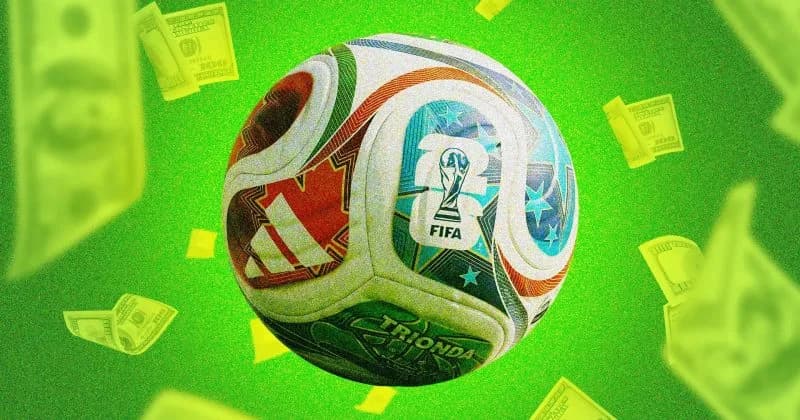
A trader known only by the handle FlickRaw bet $2.7 million that the Netherlands would beat Japan. The Dutch led twice. Japan equalized in the 88th minute anyway, the match ended in a draw, and the bet paid nothing. FlickRaw came back the next day and put $1.5 million on Belgium to beat Egypt. Belgium and Egypt drew 1-1. Two bets, roughly 24 hours, $4.2 million gone.
That's one trader's World Cup. Zoom out and the platform he lost that money on just made history. Polymarket World Cup volume on a single market, "who wins the tournament," passed $4.2 billion, quietly overtaking the platform's previous biggest market ever: the 2024 U.S. presidential election, which traded around $4 billion total.
A soccer tournament outdrew a presidential election on the same platform. That's the story worth understanding, and FlickRaw's $4.2 million lesson is a good place to start.
Polymarket World Cup Volume: The Number That Beat a Presidential Election
| Market | Total volume | What it was |
|---|---|---|
| 2026 World Cup Winner (Polymarket) | $4.2 billion | Single contract, who wins the tournament |
| 2024 U.S. Presidential Election (Polymarket) | ~$4 billion | Polymarket's previous all-time biggest market |
| Full 2026 World Cup, all markets combined | $6.4 billion+ | Every match, group, and prop market combined |
Polymarket's own World Cup Winner market page shows the contract alone quietly passed the platform's previous record holder sometime in early July, before the knockout rounds had even finished forming. Combined tournament-wide volume across every World Cup market on Polymarket is estimated north of $6.4 billion and still climbing. Bernstein projects total World Cup wagering across Polymarket and Kalshi combined could top $10 billion by the July 19 final at MetLife Stadium.
That Polymarket World Cup volume figure didn't happen in a single spike either. It built steadily through the group stage, accelerated once the knockout bracket started narrowing real contenders down, and kept climbing as elimination matches created sharper, higher-conviction pricing on every remaining team.
Kalshi, Polymarket's regulated U.S. competitor, has held daily volume above $1 billion since the tournament kicked off on June 11. Neither platform has slowed down as the bracket has narrowed.
How One Trader Lost $4.2 Million in Under 24 Hours
FlickRaw's story is worth sitting with because it's the volume number made human. Both losing bets were promoted by Polymarket itself before kickoff, the Belgium wager alone offered a potential payout around $2.4 million if it had landed. It didn't. By some accounts, the same trader's total World Cup losses climbed past $11 million across a 10-day stretch, reported first by Inc. as the story spread.
Academic research on prediction markets backs up how normal this actually is: close to 69% of users on these platforms have lost money since 2022, and a disproportionate share of total losses comes from exactly this kind of large, concentrated, high-conviction bet. The World Cup didn't create that pattern. It just put a $4.2 billion spotlight on it, and FlickRaw happened to become its most visible example.
Stories like this one are also part of why Polymarket World Cup volume keeps climbing rather than cooling off after a big loss goes viral. A widely shared loss doesn't scare traders away from a platform, it advertises how much money is actually moving through it, and that visibility pulls in more volume, not less.

Why the World Cup Beats an Election in Prediction Markets
A presidential election gives you one resolution night every four years. A month-long World Cup gives you a fresh resolution event every single day, group stage matches, knockout rounds, prop bets on individual games, all stacked on top of the single tournament-winner market.
That structural difference is the real answer to "how did soccer outdraw a presidential election." It's not that more people care about the World Cup than the presidency. It's that the World Cup gives traders 30+ separate reasons to place a bet instead of one.
Kalshi vs the World Cup Winner Market
| Platform | World Cup volume signal |
|---|---|
| Polymarket | $4.2B on the Winner market alone, $6.4B+ tournament-wide |
| Kalshi | $1B+ in daily volume sustained since June 11 kickoff |
Polymarket added $10.8 billion in trading volume across all markets in June alone, a platform record. The competitive pressure between the two is part of what's driving the pace, Kalshi already has CFTC approval for margin trading, and Polymarket has filed its own application to match that, a fight that predates the World Cup but is being fought partly on top of it.
Sneak peek: prediction markets aren't the only place regulated finance and crypto-native infrastructure have been colliding lately. Circle National Trust Bank: What Changes for USDC covers Circle's own federal charter, a different flavor of the same "crypto infrastructure goes mainstream" story playing out in real time.
The Institutional Money Piling In

The World Cup surge isn't happening in a vacuum. Polymarket closed a funding round at a $15 billion valuation in March 2026, with NYSE putting in $600 million. Annualized platform revenue crossed $1 billion during the tournament surge alone.
Meta CEO Mark Zuckerberg has personally directed development of a standalone prediction market app called Arena, after acquisition talks with Kalshi fell apart. Arena is launching with play money first, a way to test demand across Meta's roughly 3.56 billion daily active users without stepping into regulatory territory immediately. Whatever your take on any of the individual names circling this space, the pattern is clear: prediction markets stopped being a crypto-native curiosity and became something Wall Street and Silicon Valley both want a stake in.
What Happens Next
The World Cup final lands July 19 at MetLife Stadium. Every projection has total wagering climbing further between now and then, Bernstein's $10 billion combined estimate assumes the current pace holds through the knockout rounds and final.
Worth watching past the final whistle: whether this volume sustains once the tournament's daily-catalyst structure disappears, or whether it was always going to be a World Cup-specific spike. The 2024 election record stood for over a year before this tournament broke it. What breaks the World Cup's record, and how soon, is the more interesting long-term question.
Quick Answers on Polymarket's World Cup Volume
Did the World Cup really beat a presidential election in trading volume? Yes. Polymarket's World Cup Winner market alone passed $4.2 billion, edging past the roughly $4 billion the platform's 2024 U.S. presidential election market traded in total.
How much has been bet on the World Cup across all platforms? Combined Polymarket and Kalshi volume is estimated at $6.4 billion and climbing as of mid-July, with projections suggesting it could top $10 billion by the July 19 final.
What happened to the trader who lost $4.2 million? A trader using the handle FlickRaw lost $2.7 million on a Netherlands-Japan bet and $1.5 million on a Belgium-Egypt bet within about a day, both matches ending in draws that wiped out the positions.
Is Kalshi doing as much volume as Polymarket? Kalshi has sustained over $1 billion in daily volume since the tournament's June 11 kickoff, a smaller total than Polymarket's headline numbers but still a record pace for the platform.
Why is so much institutional money moving into prediction markets right now? Polymarket's $15 billion valuation and NYSE's $600 million investment, plus Meta's own prediction market app in development, all point to major financial and tech players treating prediction markets as real infrastructure rather than a crypto niche.
Will Polymarket World Cup volume keep climbing after the tournament ends? Nobody knows yet. The World Cup's daily-catalyst structure, a new match resolving almost every day, is a big part of what drove the pace. Whether that volume sustains into a slower news cycle or was always a tournament-specific spike is the open question analysts are watching for after the July 19 final.
The Bigger Picture
A soccer tournament just did something a U.S. presidential election couldn't: pull in more money on a single betting platform than any event in that platform's history. That's not really a story about the World Cup. It's a story about what happens when you give traders a resolution event every single day instead of once every four years, and what that structural advantage looks like once real institutional capital notices it.
FlickRaw's $4.2 million is a rounding error against $6.4 billion in tournament-wide volume. It's also the most honest snapshot available of what that volume actually is: real money, real conviction, and a draw in the 88th minute that made all of it disappear.
Related Articles