
Possum vs Opossum: Are They the Same Animal?
Possum vs opossum: in the US and Canada the names mean the same animal, while in Australia a possum is a different mammal.
Your reading path 8 stops

Short answer: in the United States and Canada, possum vs opossum is a spelling question, not a species question. Both words point at the same animal, Didelphis virginiana, the Virginia opossum. "Possum" is what people say in everyday speech, and "opossum" is the name on the paperwork.
But if you are talking to someone from Australia, no. A possum there is a completely different mammal, in a different family, on a different continent. That is the whole source of the confusion, and it is worth untangling because the two animals are not interchangeable and neither one behaves like the other.
Possum vs opossum in one sentence#
Opossum is the formal name for the Virginia opossum, Didelphis virginiana, a marsupial in the family Didelphidae. Possum is the everyday US and Canadian shorthand for that same animal, and also the correct name for a group of Australian marsupials that happen to look a bit similar.
Both spellings are right. They are just pointing at different animals depending on who is talking.
Possum vs opossum at a glance#
| Virginia opossum (North America) | Possum (Australia) | |
|---|---|---|
| Scientific name | Didelphis virginiana | Trichosurus vulpecula and relatives |
| Family | Didelphidae, the American opossums | Phalangeridae |
| Native range | Costa Rica north to southern Ontario | Australia, also found in New Zealand |
| Typical size | About 13 to 21.7 inches | Given as 55 cm on the factsheet |
| Tail | Long, largely hairless, prehensile | Brushy, which is where the common name comes from |
| Where it lives | Brush piles, hollow trees, drainage areas and buildings, often near people | Urban areas, forests, woodlands and heath |
The size and range figures come from the Animal Diversity Web account of the Virginia opossum and the Australian Museum's brushtail possum factsheet.
Why Americans say possum#
The possum vs opossum question in North America comes down to a missing first letter. The formal name is "opossum" and the everyday one drops the leading o. When both are pointing at Didelphis virginiana, the short form is not a misspelling and it is not slang that needs correcting. It is the same word with the first syllable worn off, and it is the one you will actually hear in conversation.
If you searched "possum vs opossum" because you saw both spellings, you are not confused. The same animal is simply filed under two names.
What the animal actually is#
The Virginia opossum belongs to Didelphidae, the American opossums, and its range runs from Costa Rica to southern Ontario. It is not closely related to raccoons, despite the similar face and the shared taste for garbage. As a marsupial, it gives birth to young that are barely developed and finishes the job in a pouch.
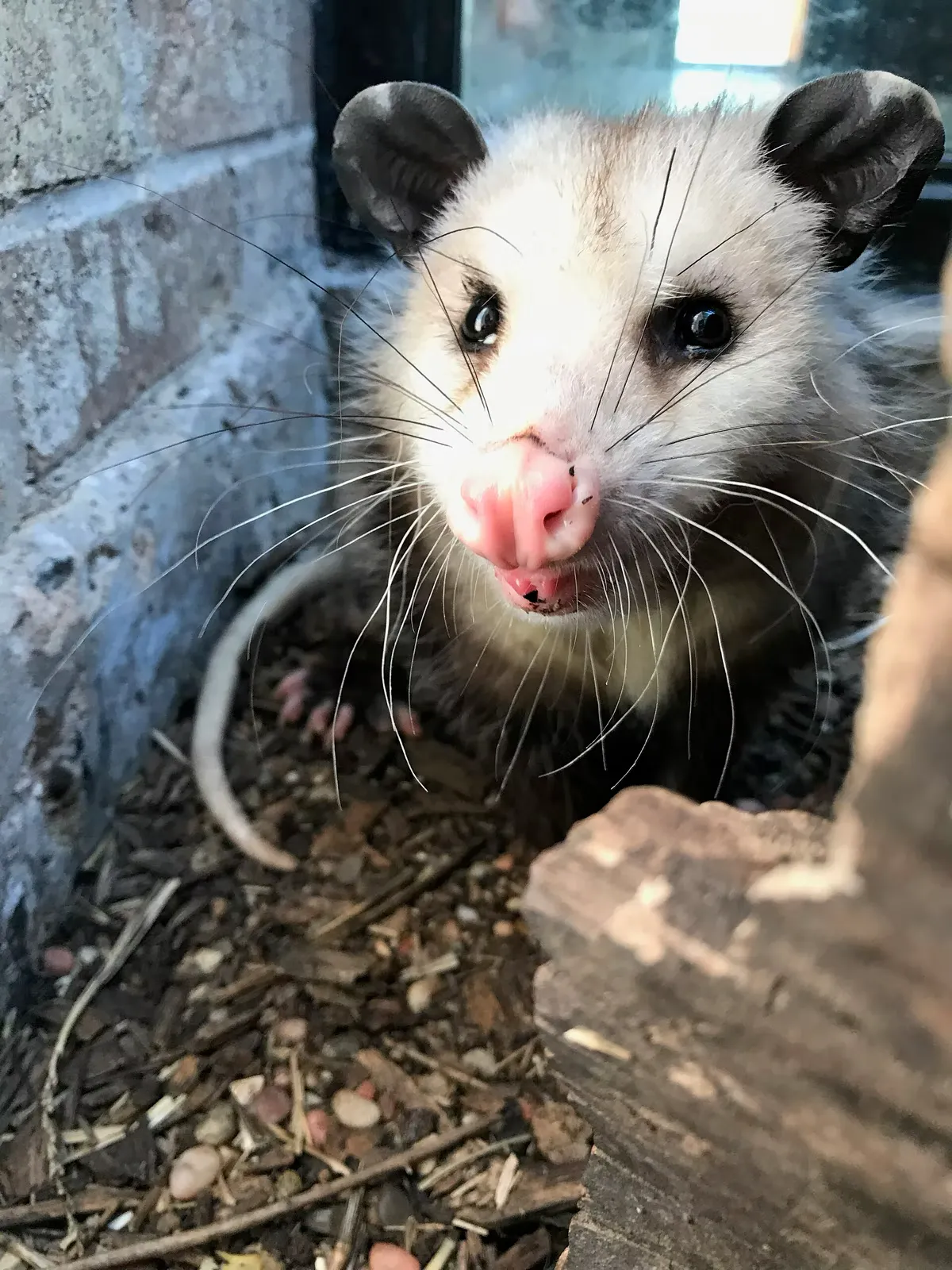 Close-up of a Virginia opossum showing its pink nose and whiskers
Photo: Simmy27star, Wikimedia Commons, CC BY-SA 4.0
Some facts that come as a surprise:
- It has 50 teeth. The dental formula is 5/4, 1/1, 3/3, 4/4 per side. That is a lot of teeth for an animal that mostly eats whatever it finds.
- Gestation is 12 to 13 days. The young weigh 0.13 to 0.20 grams at birth, roughly the size of a honey bee, and are about 14 mm long.
- A litter can be 4 to 25. Females generally have only 13 mammae, and some of those may be nonfunctional, so the size of the litter that makes it is set by the pouch rather than by the birth.
- They stay attached for 50 to 70 days, then ride on the mother's back until they are weaned at 93 to 105 days.
- Playing dead is real, and it is not common. The catatonic state, sometimes called "going opossum," can last from a minute to six hours, and young animals do it far more often than adults. A threatened adult is more likely to bare its teeth and stand its ground, or to flee.
- They are short-lived. In the wild, most live about 1.5 to 2 years.
- They do not hibernate. They slow down in cold weather and den in brush piles, hollow trees, drainage areas, and under buildings.
The marsupial arithmetic is what makes those numbers look strange. The young are altricial, born before they can do much more than crawl, and they use their front legs to make the trip to the pouch. Many never complete it, and the ones that do are the ones that find a place to attach. A female can give birth to 25 young and still end up with about 8 in the pouch.
The denning habit explains a lot of the rest. The same account describes the species as ill equipped for cold, with poor temperature control and thin insulation, and notes that frostbite is common in northern populations, especially on the largely hairless ears and tail. A building, a gap under a shed, or a brush pile is not a food stop for an opossum. It is winter housing.
They are nocturnal, solitary, and opportunists. One study of stomach contents in Portland, Oregon found that as much as 9 percent of the diet was garbage and another 9 percent was pet food, which is exactly why they end up on decks and around bins. Their success in towns is not an accident either: the same account credits their small body size, nocturnal habits, and high reproductive output for their ability to thrive in human altered landscapes. For a homeowner, that is the useful part of the possum vs opossum background: the animal is not lost, it is following food.
How to tell what you have in your yard#
If you are in the US or Canada, the animal is an opossum. For a reader sorting out possum vs opossum, that settles the identification question: there is no Australian possum in your yard, because the two groups live on opposite sides of the world. The American identification problem is an opossum versus a raccoon, and the two do cross paths: the Animal Diversity Web lists raccoons among the species that prey on Virginia opossums.
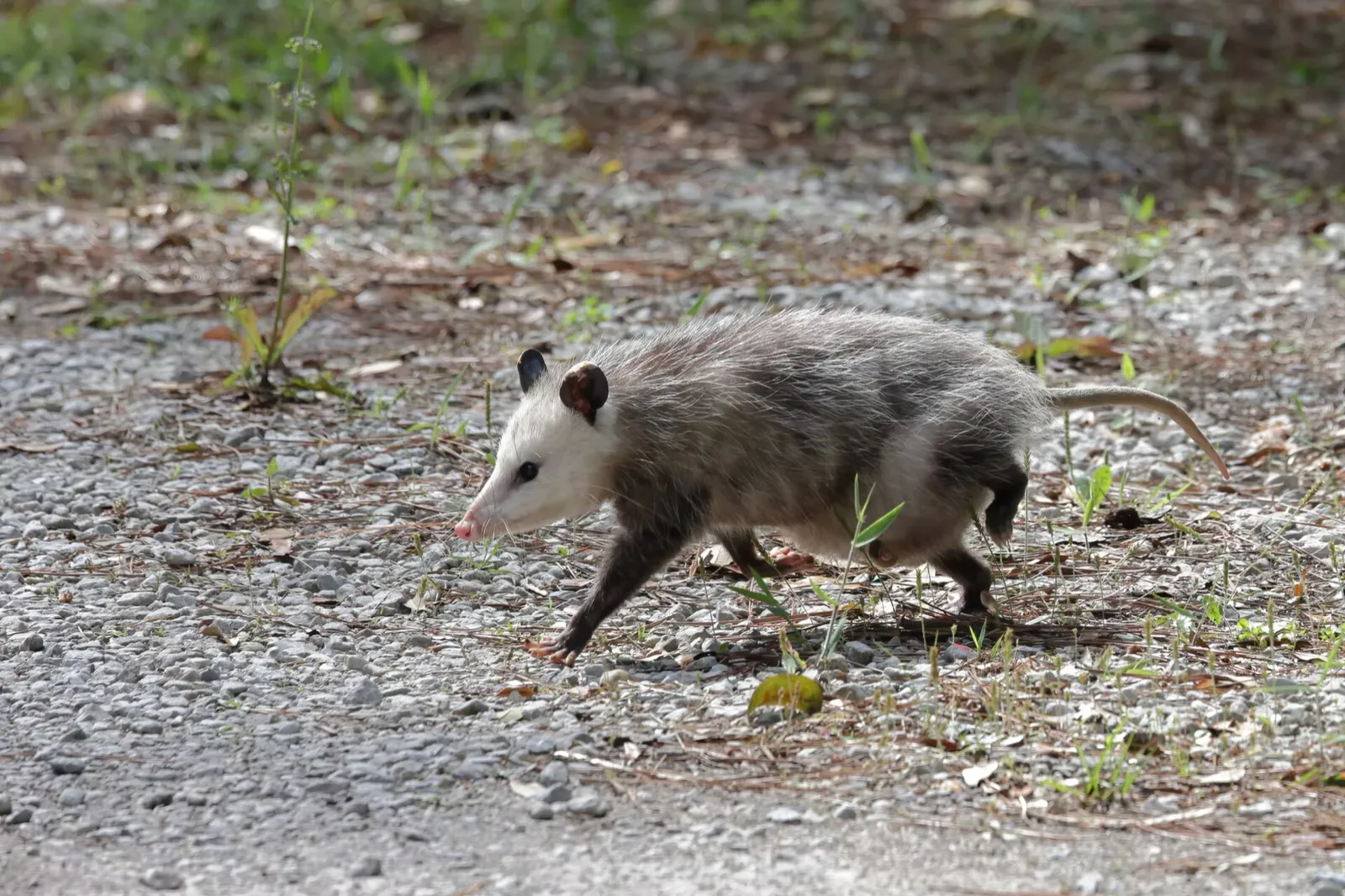 Virginia opossum walking along a gravel path with its tail trailing
Photo: Lauren McLaurin, Wikimedia Commons, CC BY 4.0
Our opossum poop guide covers what the droppings look like and where they turn up. For the animal profile, including tracks and behavior, see the opossum page.
What to do about one#
Usually nothing. An opossum passing through is doing you a favor: it eats insects, snails, and carrion.
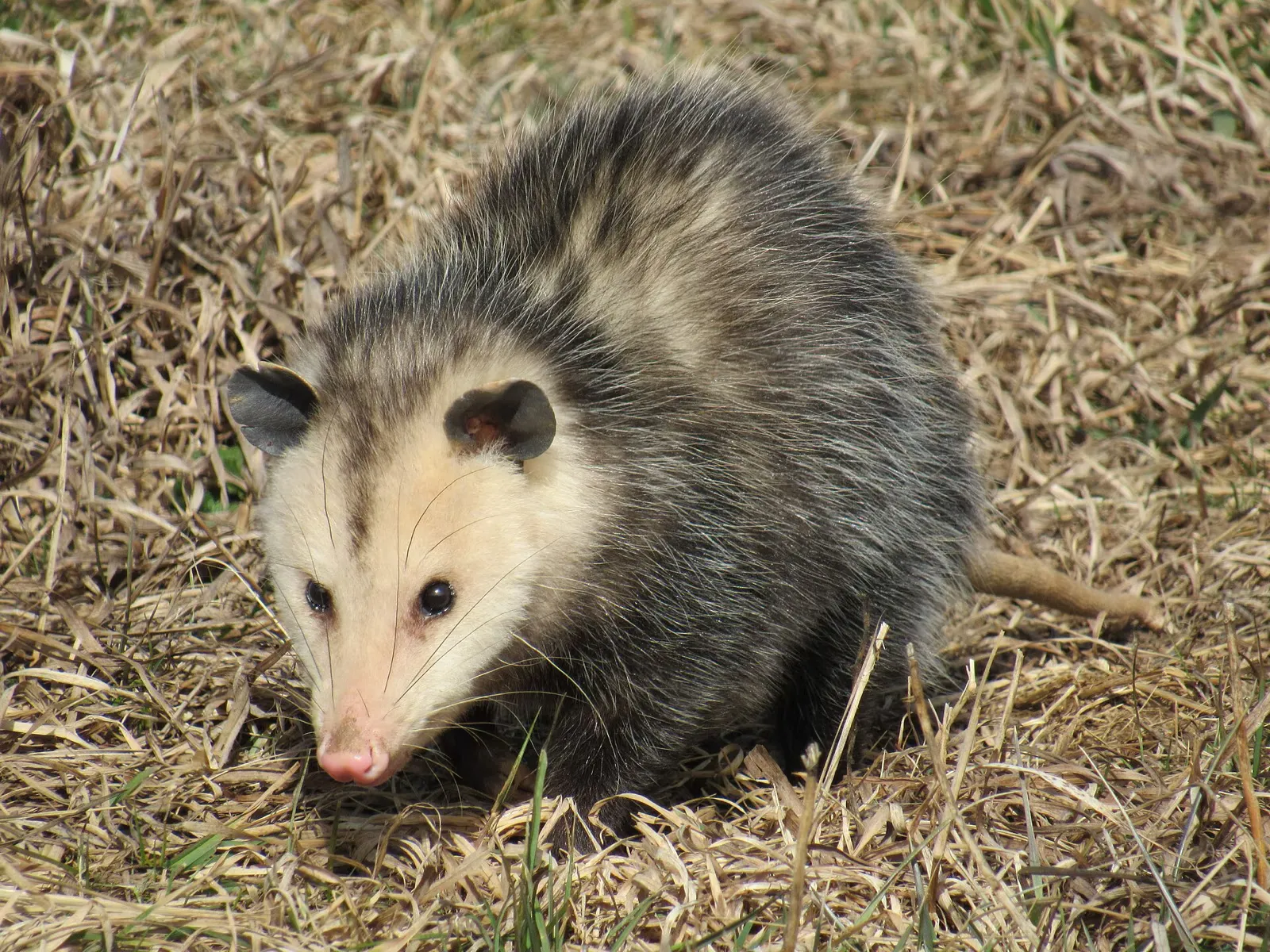 Virginia opossum with gray fur and pale face standing in dry grass
Photo: PookieFugglestein, Wikimedia Commons, CC0
They do raid pet food and garbage, and the Animal Diversity Web notes their proclivity for poultry. The fix is boring and effective: feed pets indoors, secure the compost, latch the bins, and close off the space under a deck or shed before winter denning starts. That advice holds whatever name you use, which is the practical upshot of the possum vs opossum question.
A cornered opossum is more likely to bare its teeth and stand its ground, or to flee. Rabies in opossums is unusual, and do opossums carry rabies is worth reading in full if you or a pet has been bitten or scratched. Our humane removal guide for opossums covers exclusion and eviction without traps or poisons.
If you found evidence and are not sure what left it, the sign finder matches poop, holes, tracks, and noises against every animal in the guide.
Possum vs opossum FAQ#
Is a possum the same as an opossum? In North America, yes. Both names refer to the Virginia opossum, Didelphis virginiana. In Australia, the word possum refers to a different group of marsupials entirely.
Which spelling is correct in the US: possum vs opossum? Both. The Animal Diversity Web account uses the formal name, Virginia opossum, and the short form is what people say out loud. Neither is a typo.
Are opossums dangerous? They are rarely aggressive, and rabies in opossums is unusual. The bigger issue is parasites: the Animal Diversity Web notes they are known carriers of at least 24 internal and 13 external parasites. There is also the mess they make around pet food and bins. Handle cleanup with gloves and wash up afterwards.
Do opossums hang by their tails? Their tails are prehensile and act as an extra limb while climbing, which is where the story comes from. The animal is terrestrial but also an adept climber, and it may den in trees. The tail as a place to hang and sleep is the part to be skeptical about.
How long do opossums live? About 1.5 to 2 years in the wild, and 3 to 4 years in captivity. The Animal Diversity Web calls that a fairly short lifespan.
Sources#
- Animal Diversity Web, University of Michigan Museum of Zoology. Didelphis virginiana (Virginia opossum). Accessed 17 November 2026.
- Australian Museum. Common Brushtail Possum. Accessed 17 November 2026.
You made it to the end!
Still not sure who visited? Bobr's sign finder narrows it down in a few taps.
A 4-part series
The Opossum series, chapter by chapter
- Chapter 1
Possum vs Opossum: Are They the Same Animal?
Possum vs opossum: in the US and Canada the names mean the same animal, while in Australia a possum is a different mammal.
You're reading this✓ Read - Chapter 2
Do Opossums Carry Rabies? What the Evidence Says
Do opossums carry rabies? Rarely, and the animals are not immune.
✓ Read - Chapter 3
What Do Opossums Eat? Diet, Scavenging and Yard Food
Opossums eat insects first, then carrion, fruit, worms, small animals, eggs and any pet food left outside. Here is the diet, season by season, and what to remove.
Coming soon · November 28✓ Read - Chapter 4
Are Opossums Dangerous? What the Evidence Says
An opossum would rather hiss, droop or play dead than bite, and the bites that happen come from an animal someone cornered. The real risks sit in the droppings, the urine and the fleas, and the cleanup rules come from the CDC.
Coming soon · December 11✓ Read
2 of 4 chapters are out; new ones appear here as they publish.
Animals in this article
Keep reading
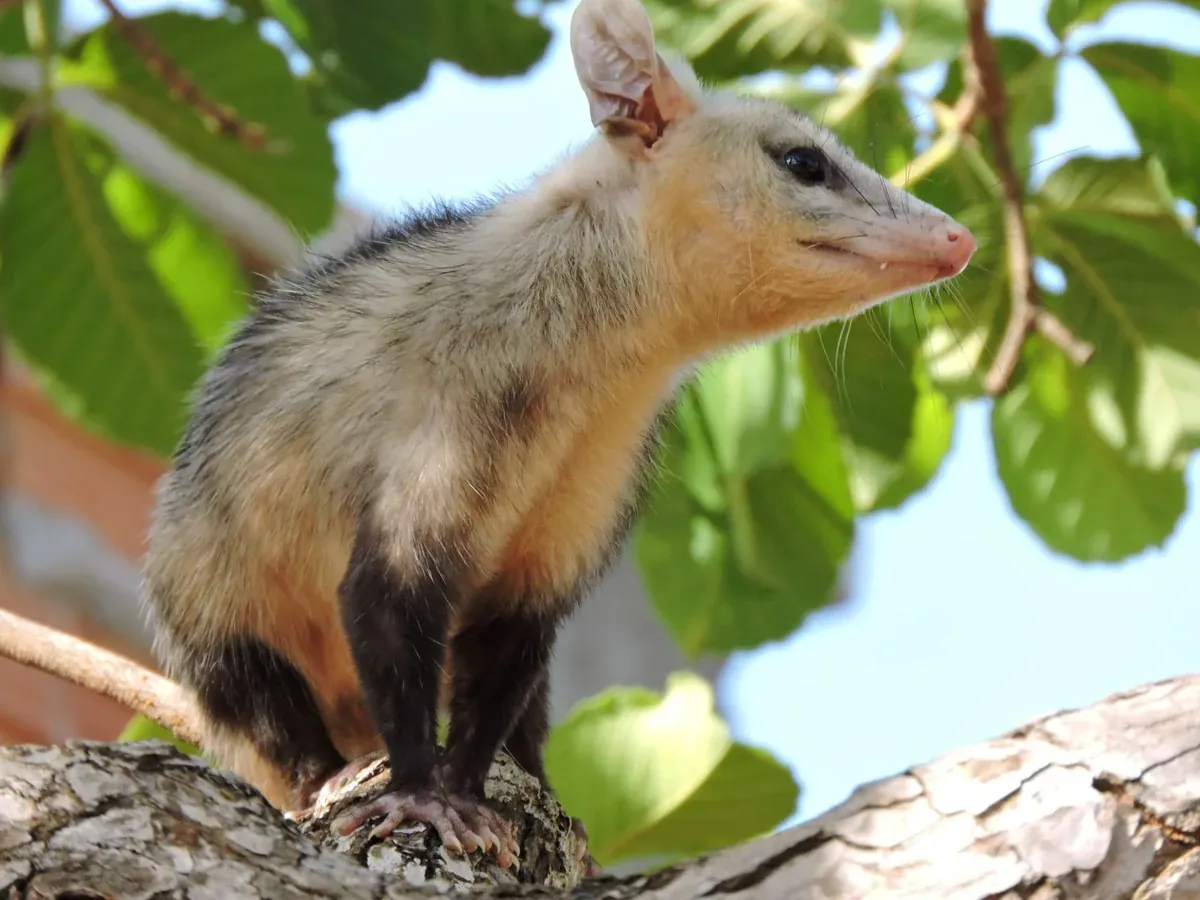
Do Opossums Carry Rabies? What the Evidence Says
Do opossums carry rabies? Rarely, and the animals are not immune.
Skunk Smell Removal: What Actually Works
Skunk smell removal that works: the peroxide, baking soda and dish soap mix neutralizes the spray.
How to Get Rid of Woodpeckers Without Breaking the Law
How to get rid of woodpeckers without breaking the law: why they drum on siding and gutters, plus the legal fixes that stop the damage for good.
No comments yet. Seen this in your own yard? Start the thread.
Leave a comment